
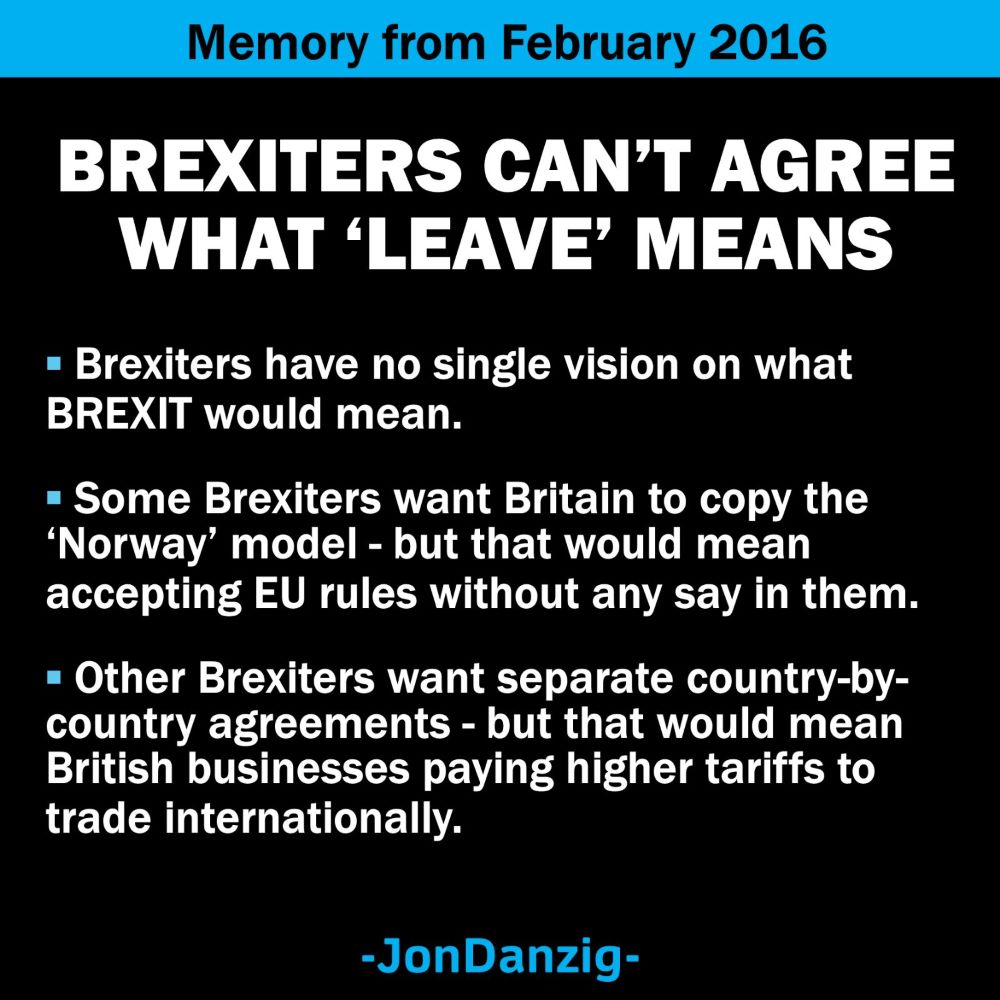
𝗗𝗔𝗧𝗘𝗟𝗜𝗡𝗘 𝗙𝗘𝗕𝗥𝗨𝗔𝗥𝗬 𝟮𝟬𝟭𝟲: Here’s a question for you, I wrote in my report of February 2016:
‘𝗪𝗼𝘂𝗹𝗱 𝘆𝗼𝘂 𝗺𝗼𝘃𝗲 𝗵𝗼𝗺𝗲 𝘄𝗶𝘁𝗵𝗼𝘂𝘁 𝗸𝗻𝗼𝘄𝗶𝗻𝗴 𝘄𝗵𝗮𝘁 𝘆𝗼𝘂𝗿 𝗻𝗲𝘅𝘁 𝗵𝗼𝗺𝗲 𝗹𝗼𝗼𝗸𝘀 𝗹𝗶𝗸𝗲?’
No, me neither.
But that’s what those campaigning for Britain to leave the EU were expecting voters to do – vote to end our membership of the EU without knowing what we’d have instead.
The problem LEAVERS had is that they simply didn’t know, and for sure they couldn’t agree.
As a result, two rival, irreconcilable ‘Leave’ campaigns were launched in the run-up to the referendum:
UKIP’s leader, Nigel Farage, supported one (Leave.EU) and UKIP’s then only MP, Douglas Carswell, supported the other (Vote Leave).
And as confirmed by the Financial Times in February 2016, the two ‘leave’ campaigns were in disarray.
 𝗢𝗻 𝘁𝗵𝗲 𝗼𝗻𝗲 𝗵𝗮𝗻𝗱, 𝗠𝗿 𝗙𝗮𝗿𝗮𝗴𝗲 𝘄𝗮𝗻𝘁𝗲𝗱 𝘁𝗼 𝗰𝘂𝗿𝘁𝗮𝗶𝗹 𝗶𝗺𝗺𝗶𝗴𝗿𝗮𝘁𝗶𝗼𝗻 𝗮𝗻𝗱 𝘀𝘁𝗼𝗽 𝗘𝗨 𝗺𝗶𝗴𝗿𝗮𝗻𝘁𝘀 𝗰𝗼𝗺𝗶𝗻𝗴 𝘁𝗼 𝗕𝗿𝗶𝘁𝗮𝗶𝗻.
𝗢𝗻 𝘁𝗵𝗲 𝗼𝘁𝗵𝗲𝗿, 𝗠𝗿 𝗖𝗮𝗿𝘀𝘄𝗲𝗹𝗹 𝘄𝗮𝗻𝘁𝗲𝗱 𝘁𝗼 𝗽𝗿𝗼𝗺𝗼𝘁𝗲 𝗮 𝗦𝗶𝗻𝗴𝗮𝗽𝗼𝗿𝗲-𝘀𝘁𝘆𝗹𝗲 𝗺𝗼𝗱𝗲𝗹 𝗳𝗼𝗿 𝗕𝗿𝗶𝘁𝗮𝗶𝗻, 𝗼𝗽𝗲𝗻 𝘁𝗼 𝗰𝗮𝗽𝗶𝘁𝗮𝗹 𝗮𝗻𝗱 𝗺𝗶𝗴𝗿𝗮𝘁𝗶𝗼𝗻.
Instead of Britain leaving the EU, these two prominent members of UKIP seemed to be putting the case for leaving each other.
Or as the Financial Times put it at the time:
“It is not just a matter of discordant personalities. Out campaigners have struggled to unite around a single vision of what Britain’s post-Brexit trading arrangements would look like.”
And this was the core problem for the LEAVERS – their Achilles heel. Explained the FT:
“They have also failed to provide a convincing explanation of how leaving the EU would give the British greater control over their destiny and improved economic prospects.
“This is not surprising because none of the models that is mooted for a future outside the EU is convincing.”
If Eurosceptics couldn’t even agree among themselves what it meant for Britain to leave the European Union, it seemed a bit rich to expect that voters would know.
They didn’t know because the LEAVERS didn’t know.
As I concluded in my report of February 2016:
‘𝗢𝗻 𝘁𝗵𝗶𝘀 𝗯𝗮𝘀𝗶𝘀, 𝗜 𝗰𝗮𝗻’𝘁 𝗿𝗲𝗰𝗼𝗺𝗺𝗲𝗻𝗱 𝗮𝗻𝘆𝗼𝗻𝗲 𝘁𝗼 𝘃𝗼𝘁𝗲 𝘁𝗼 𝗟𝗲𝗮𝘃𝗲. 𝗢𝘂𝗿 𝗺𝗲𝗺𝗯𝗲𝗿𝘀𝗵𝗶𝗽 𝗼𝗳 𝘁𝗵𝗲 𝗘𝗨 𝗶𝘀 𝗻𝗼𝘁 𝘁𝗵𝗮𝘁 𝗯𝗮𝗱; 𝗮𝗻𝗱 𝘁𝗵𝗲 𝗼𝗽𝘁𝗶𝗼𝗻𝘀 𝗳𝗼𝗿 𝗹𝗲𝗮𝘃𝗶𝗻𝗴 (𝘄𝗵𝗶𝗰𝗵𝗲𝘃𝗲𝗿 𝗼𝗻𝗲 𝘆𝗼𝘂 𝗺𝗶𝗴𝗵𝘁 𝗰𝗵𝗼𝗼𝘀𝗲) 𝗮𝗿𝗲 𝗻𝗼𝘁 𝘁𝗵𝗮𝘁 𝗴𝗼𝗼𝗱.’
The problem, of course, is that Leavers didn’t have any choice of what version of Brexit they would get when they voted on 23 June 2016.
That wasn’t decided until three years later – decided by the government, that is, and not by us, ‘the people’.